Neuroscience
Academic Lite
Expert Verified
This coffee microbiota gut brain axis cognition study reveals that habitual consumption shapes gut bacteria and behavior. Coffee drinkers showed increased Cryptobacterium and Eggerthella species but reduced levels of the neurotransmitter GABA.
Coffee microbiota gut brain axis cognition research reveals that habitual consumption shapes gut bacteria and behavior. In this study, coffee drinkers showed increased Cryptobacterium and Eggerthella species but reduced levels of the neurotransmitter GABA. This matters because coffee reintroduction, regardless of caffeine, modulated stress and immunity.
Grab a cup, because we are diving deep into how your daily brew actually rewires your biology. This coffee microbiota gut brain axis cognition study is fascinating because it separates the effects of caffeine from the coffee bean itself. Let me break down how 14 days without coffee changed everything from memory to gut bacteria.
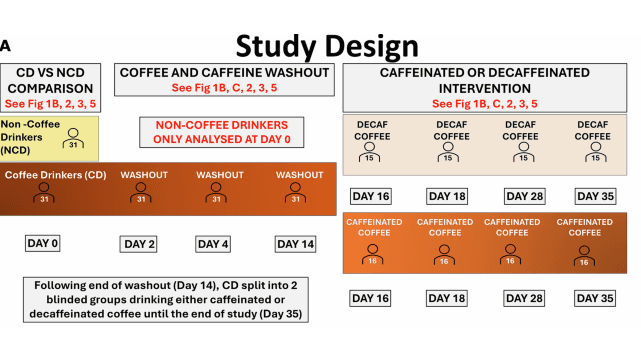
The study compared 31 habitual coffee drinkers with 31 non-coffee drinkers to establish a baseline. The evidence suggests distinct behavioral differences between the groups. Coffee drinkers scored significantly higher on impulsivity and emotional reactivity scales. Conversely, non-coffee drinkers demonstrated better memory performance at baseline.
On the microbial side, coffee drinkers exhibited a specific gut microbiome signature. They showed an increased relative abundance of Cryptobacterium and Eggerthella species. However, they also had reduced levels of key metabolites, including indole-3-propionic acid, indole-3-carboxyaldehyde, and the neurotransmitter gamma-aminobutyric acid (GABA). This indicates that coffee influences specific bacterial strains rather than altering overall diversity.
The researchers implemented a 14-day coffee abstinence period followed by a 21-day reintroduction phase where participants drank either caffeinated or decaffeinated coffee. Here is the fascinating part. The reintroduction of coffee triggered acute microbiome changes that were independent of caffeine content. This means compounds in the coffee other than caffeine are driving these microbial shifts.
Behaviorally, the type of coffee mattered. Decaffeinated coffee led to significant improvements in several ModRey memory test components and reduced errors in learning tasks. Caffeinated coffee did not improve memory but did result in reduced anxiety and psychological distress. Both types of coffee lowered perceived stress and depression scores, suggesting that non-caffeine components play a major role in the microbiota gut brain axis.
We also observed significant immune system changes. Coffee drinkers had lower basal levels of C-reactive protein (CRP) and higher levels of the anti-inflammatory cytokine IL-10 compared to non-drinkers. When coffee drinkers abstained for just two weeks, inflammatory markers like CRP and TNF-alpha increased. This suggests a protective role of coffee against inflammation.
However, we must acknowledge the limitations. The study did not directly measure stool transit time, relying instead on surrogate markers like the Bristol Stool Scale. Additionally, the sample had limited ethnic diversity, which may affect how generalizable these findings are to broader populations. Future research should address these gaps to fully understand the microbiota gut brain axis.
Coffee drinkers showed increased relative abundance of Cryptobacterium and Eggerthella species compared to non-drinkers. They also had reduced levels of the neurotransmitter gamma-aminobutyric acid (GABA) and indole-3-propionic acid. These changes suggest coffee specifically targets microbial strains rather than overall diversity.
The study found that decaffeinated coffee led to significant improvements in several ModRey test components and reduced errors in the Paired Associates Learning task. In contrast, the caffeinated group did not show these specific memory gains, though they did exhibit reduced anxiety and psychological distress.
Coffee drinkers exhibited lower basal C-reactive protein (CRP) and higher anti-inflammatory IL-10 levels, but abstinence increased inflammatory markers like TNF-alpha. A key limitation is the absence of direct stool transit time measurements, as researchers relied on surrogate markers like the Bristol Stool Scale instead.
This article has been reviewed by a PhD-qualified expert to ensure scientific accuracy. While AI assists in making complex research accessible, all content is verified for factual correctness before publication.
Brainless Jellyfish Sleep Like Humans - It Reveals Why Sleep Evolved
New research shows that brainless jellyfish and sea anemones sleep for about eight hours daily to repair DNA damage in their neurons, suggesting sleep evolved over 600 million years ago with the very first nerve cells rather than with complex brains.
How Coffee Reshapes Your Gut, Brain, and Mood – New Study Reveals
Your daily brew changes your gut bacteria and brain chemistry. Here's what the new science reveals about coffee metabolism.
How Coffee Affects Your Gut Brain Connection Explained Simply!
Scientists found that coffee changes the tiny bugs in your tummy to talk to your brain, which might make you feel jumpy or forgetful.
No comments yet. Be the first to share your thoughts!
Get notified when we publish new articles. No spam, unsubscribe anytime.