Neuroscience
Podcast Host
Expert Verified
Your daily brew changes your gut bacteria and brain chemistry. Here's what the new science reveals about coffee metabolism.
Hey there, coffee lovers. So I was sipping my morning brew yesterday when I stumbled across this wild new study about the coffee gut brain axis cognition mood connection, and honestly, my mind is still kind of blown. We all know coffee makes us feel awake, but who knew it was literally rewiring our gut bacteria AND our brain chemistry at the same time? The coffee gut brain axis cognition mood research just dropped and it turns out your daily cup is doing way more than just perking you up.
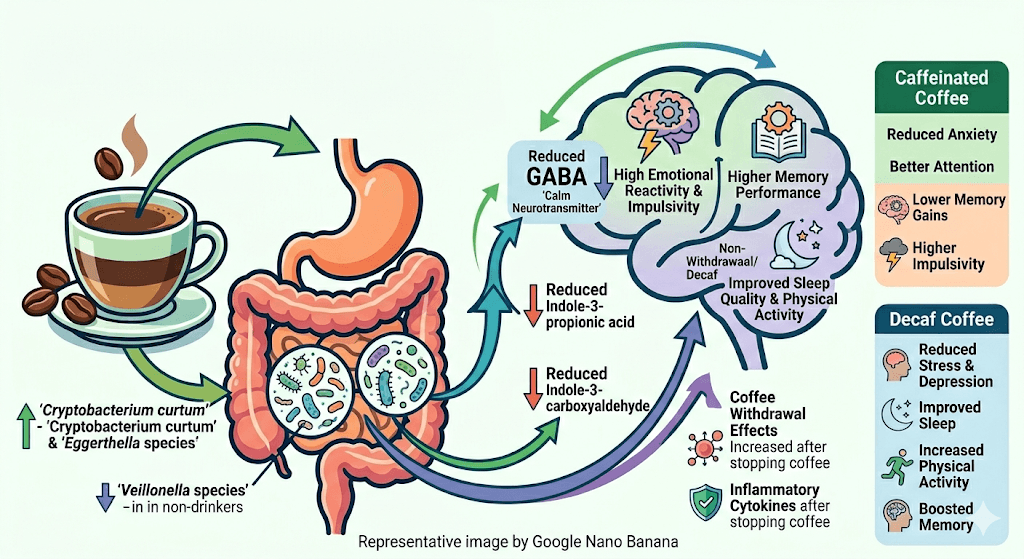
OK so here is the deal: researchers tracked 62 people for several weeks to see how coffee changes their gut bacteria and brain function. Coffee drinkers had completely different gut microbes with way more Cryptobacterium and Eggerthella species than non-drinkers. The crazy part is these microbial changes were linked to actual differences in how people's brains worked - including things like memory, impulsivity, and emotional reactivity. So basically, your coffee habit is sculpting your microbiome which in turn shapes your mood and cognition. Wild.
So here's what went down in this study published in Nature Microbiology. Scientists compared 31 regular coffee drinkers with 31 non-drinkers, then had the coffee group quit cold turkey for two weeks before reintroducing either caffeinated or decaf coffee. They analyzed everything from stool samples to cognitive tests, and the findings are pretty fascinating. Coffee drinkers showed significantly higher levels of specific bacteria strains like Cryptobacterium curtum and Eggerthella species, while non-drinkers had more Veillonella species.
What's really interesting is that after just two weeks without coffee, those bacterial levels started shifting back toward non-drinker patterns. But when people started drinking coffee again, decaf triggered almost as many microbial changes as regular coffee. This suggests that a lot of coffee's gut effects come from those polyphenols and other compounds, not just the caffeine. The researchers identified nine key metabolites including theophylline and various phenolic acids that were strongly connected to both microbial species and cognitive measures.
Oh man, this is where it gets really personal. The study found that coffee drinkers scored higher on impulsivity and emotional reactivity tests compared to non-drinkers. But when they quit coffee for two weeks, those impulsivity scores actually went down, and their memory performance improved. It's like coffee makes you more reactive and impulsive in the moment, but might be trading off some memory function for that boost.
The chemistry behind this is fascinating. Coffee drinkers had reduced levels of certain compounds in their gut, including indole-3-propionic acid, indole-3-carboxyaldehyde, and GABA which is a neurotransmitter that helps calm your brain. Lower GABA might explain why coffee drinkers were more emotionally reactive. And when people quit coffee, their levels of these brain-affecting compounds started bouncing back. The researchers also found that coffee consumption affects inflammation markers, with drinkers showing lower levels of certain inflammatory cytokines.
OK so this is the part that actually matters for your daily life. Both caffeinated and decaf coffee reduced stress and depression scores, but they did it in different ways. Decaf drinkers saw improvements in sleep quality and physical activity, which boosted their memory performance. Caffeinated coffee drinkers got reduced anxiety and better attention, but missed out on those memory gains. It's like you've gotta choose your benefit based on what your body needs.
The researchers also found that coffee withdrawal isn't just about headaches. After two weeks without coffee, people's inflammatory markers increased, suggesting that regular coffee might actually be protecting against inflammation. And when they brought coffee back, it changed immune function regardless of caffeine content. This makes me think differently about my daily habit - it's not just about the morning energy boost, it's about maintaining this whole ecosystem in my gut that affects my mood, my immune system, even how impulsive I feel throughout the day. Maybe there's no perfect answer, but knowing how deeply coffee affects our internal systems helps us make more intentional choices about when and how we drink it.
Yes, the study found that coffee drinkers had higher impulsivity and emotional reactivity but worse memory performance compared to non-drinkers. When people quit coffee for just two weeks, their memory scores improved significantly. Decaf coffee specifically enhanced memory, sleep quality, and physical activity, suggesting that non-caffeine compounds in coffee support cognitive function.
The study showed that gut microbiome changes can happen within weeks. When regular coffee drinkers abstained for just 14 days, their bacterial profiles started shifting back toward non-drinker patterns, with reduced levels of coffee-associated bacteria like Cryptobacterium. Reintroducing coffee triggered acute microbiome changes within days, showing how responsive your gut bacteria are to dietary changes.
Surprisingly, yes. The researchers found that decaffeinated coffee triggered almost as many microbial changes as regular coffee, suggesting many of coffee's gut benefits come from polyphenols and other compounds, not just caffeine. Both types lowered stress, depression, and impulsivity while boosting mood, though they had different effects on cognition with decaf improving memory and regular coffee reducing anxiety.
This article has been reviewed by a PhD-qualified expert to ensure scientific accuracy. While AI assists in making complex research accessible, all content is verified for factual correctness before publication.
Brainless Jellyfish Sleep Like Humans - It Reveals Why Sleep Evolved
New research shows that brainless jellyfish and sea anemones sleep for about eight hours daily to repair DNA damage in their neurons, suggesting sleep evolved over 600 million years ago with the very first nerve cells rather than with complex brains.
How Coffee Affects Your Gut Brain Connection Explained Simply!
Scientists found that coffee changes the tiny bugs in your tummy to talk to your brain, which might make you feel jumpy or forgetful.
How Coffee Rewires Your Gut and Brain - Beyond Caffeine
This coffee microbiota gut brain axis cognition study reveals that habitual consumption shapes gut bacteria and behavior. Coffee drinkers showed increased Cryptobacterium and Eggerthella species but reduced levels of the neurotransmitter GABA.
No comments yet. Be the first to share your thoughts!
Get notified when we publish new articles. No spam, unsubscribe anytime.