Neuroscience
News Reporter
Expert Verified
New research shows that brainless jellyfish and sea anemones sleep for about eight hours daily to repair DNA damage in their neurons, suggesting sleep evolved over 600 million years ago with the very first nerve cells rather than with complex brains.
New research reveals that even brainless marine creatures like jellyfish and sea anemones experience sleep, offering clues to one of biology’s oldest mysteries: why we sleep.
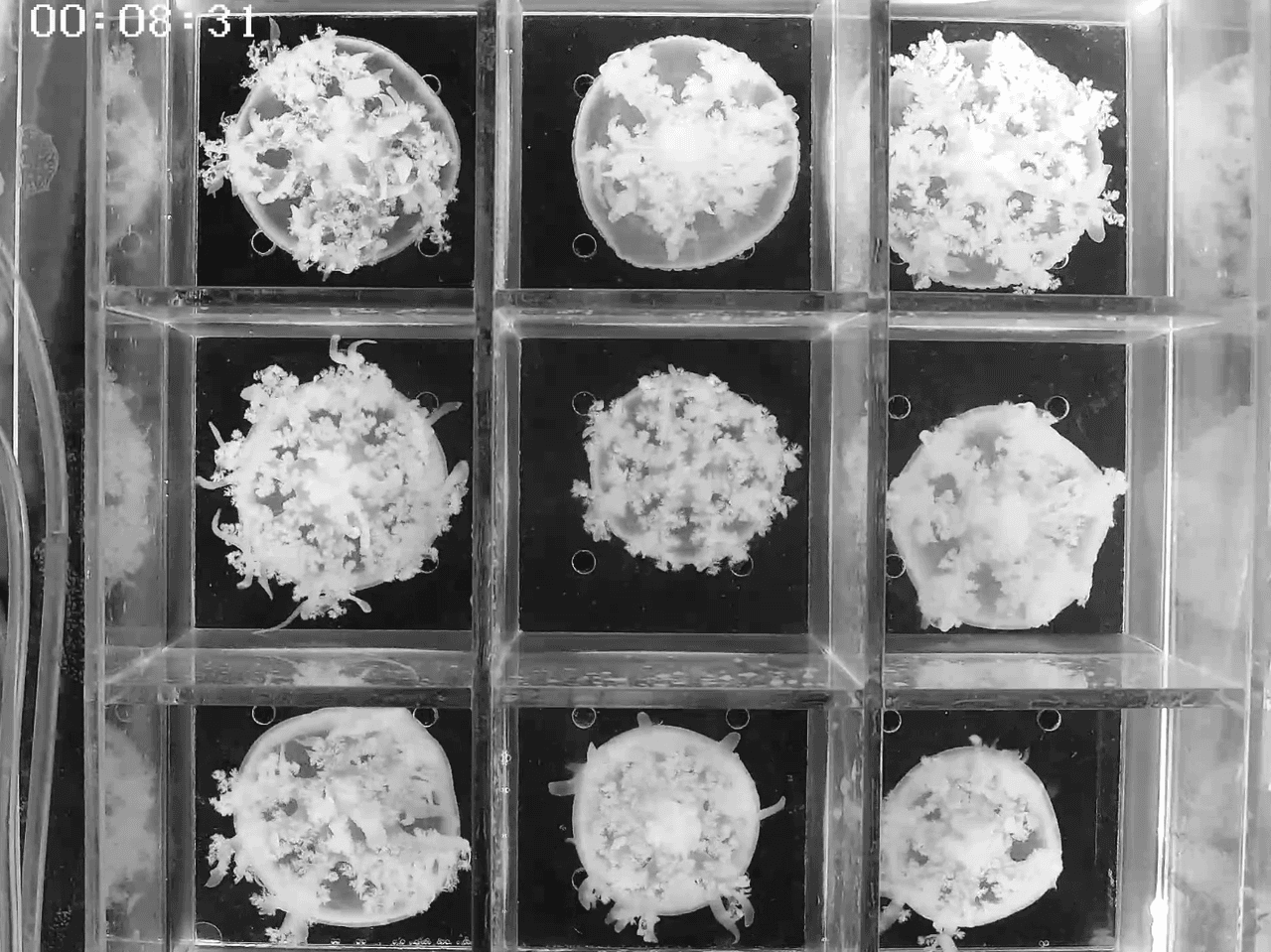
According to a study published in Nature Communications, the upside-down jellyfish (Cassiopea andromeda) and starlet sea anemone (Nematostella vectensis) enter daily sleep-like states lasting about eight hours—just like humans. The finding suggests that sleep evolved not with complex brains, but with the very first neurons.
Neurons are very precious, says Dr. Lior Appelbaum, molecular neuroscientist at Bar-Ilan University and co-author. They don’t divide, so you need to keep them intact. (Source from Nature news By Lynne Peeples.)
Sleep is risky. It leaves animals vulnerable. Yet it persists across species—from flies to whales—implying a vital function.
Scientists have long suspected sleep plays a role in cellular repair. This study confirms it: wakefulness causes DNA damage in neurons, and sleep helps repair it.
In both jellyfish and anemones, researchers found DNA damage builds up during waking hours. Sleep, whether natural or induced by melatonin, reduced this damage.
Even more striking: exposing the animals to UV radiation or DNA-damaging chemicals increased their sleep pressure—proving a direct link between DNA damage and the need to sleep.
Neither species has a brain. Instead, they have simple nerve nets—diffuse networks of neurons.
Yet they meet all behavioral criteria for sleep: periods of immobility, reduced response to stimuli, and recovery after sleep deprivation.
The jellyfish slept at night and took midday naps. The anemone, active at dusk, slept more at dawn—regulated by its internal clock.
Every time somebody adds to the list of species that sleep, it is a very important step for the field, says Chiara Cirelli, sleep researcher at the University of Wisconsin–Madison, not involved in the study.
The study suggests sleep’s core evolutionary purpose is to protect neuronal DNA.
Since neurons don’t regenerate, they must be maintained. Sleep provides a “consolidated period” for repair—free from the metabolic and environmental stresses of wakefulness.
Melatonin, a hormone tied to sleep in humans, also induced sleep in both species—despite their different activity patterns—hinting at an ancient, shared sleep-regulating mechanism.
Understanding sleep in these ancient animals helps trace its origins to over 600 million years ago—possibly predating centralized nervous systems.
It also reinforces that sleep isn’t about consciousness or cognition—it’s cellular maintenance.
Future studies may explore whether coral colonies, made of interconnected polyps, exhibit synchronized or rotating sleep patterns.
Sleep likely evolved not for dreaming, learning, or memory—but to repair DNA in irreplaceable neurons.
As Appelbaum puts it: "Sleep may have emerged with neurons themselves."
This discovery reshapes our understanding of one of life’s most essential behaviors.
This is a developing story in evolutionary neuroscience.
Even though jellyfish and sea anemones lack brains, they have simple nerve nets made of neurons that meet the key behavioral criteria for sleep: periods of immobility, reduced response to stimuli, and recovery after sleep deprivation. The study shows that sleep evolved with neurons themselves, not complex brains, suggesting sleep is a fundamental cellular process tied to neuronal maintenance.
The research suggests that the core evolutionary purpose of sleep is to repair DNA damage in neurons caused by wakefulness. Since neurons are long-lived and don’t regenerate easily, sleep provides a protected time for cellular repair, protecting the genome from accumulating damage due to metabolic and environmental stresses.
By showing that brainless marine animals like jellyfish and sea anemones experience sleep regulated by mechanisms such as melatonin and circadian rhythms, the study indicates that sleep originated over 600 million years ago—possibly before centralized nervous systems. This implies sleep is an ancient, conserved biological function essential for neuronal survival, not tied to consciousness or complex cognition.
This article has been reviewed by a PhD-qualified expert to ensure scientific accuracy. While AI assists in making complex research accessible, all content is verified for factual correctness before publication.
How Coffee Reshapes Your Gut, Brain, and Mood – New Study Reveals
Your daily brew changes your gut bacteria and brain chemistry. Here's what the new science reveals about coffee metabolism.
How Coffee Affects Your Gut Brain Connection Explained Simply!
Scientists found that coffee changes the tiny bugs in your tummy to talk to your brain, which might make you feel jumpy or forgetful.
How Coffee Rewires Your Gut and Brain - Beyond Caffeine
This coffee microbiota gut brain axis cognition study reveals that habitual consumption shapes gut bacteria and behavior. Coffee drinkers showed increased Cryptobacterium and Eggerthella species but reduced levels of the neurotransmitter GABA.
No comments yet. Be the first to share your thoughts!
Get notified when we publish new articles. No spam, unsubscribe anytime.