Biotechnology
Explain Like I'm 5
Expert Verified
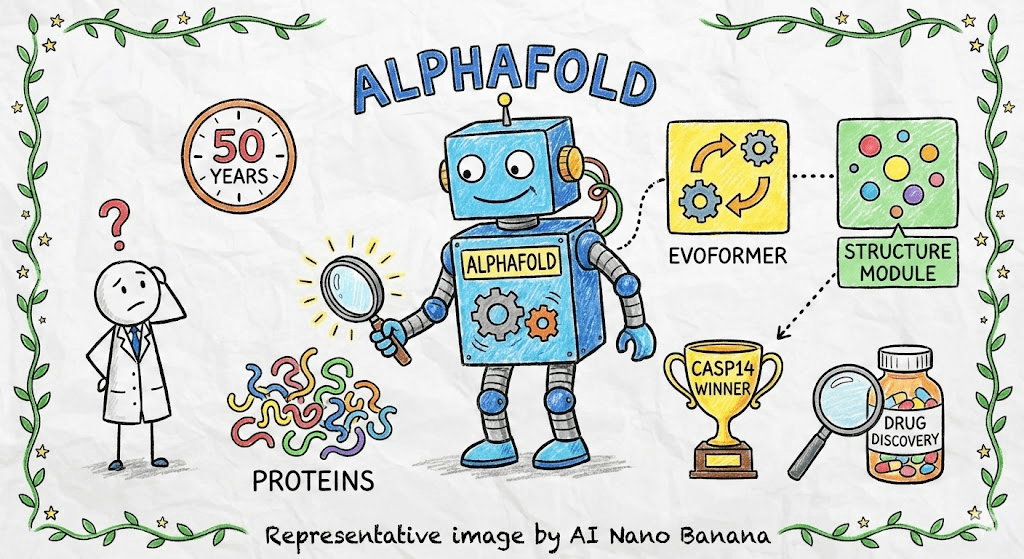
Scientists built a smart computer named AlphaFold. It can guess the shapes of tiny body builders called proteins super fast!
Imagine tiny invisible machines inside your body that keep you running, jumping, and playing. These machines are called proteins! For a very long time, figuring out what these proteins looked like was a super hard puzzle for scientists. It could take months or even years to solve just one! But guess what? A group of scientists built a super-smart computer helper called AlphaFold. This program can look at a list of ingredients and draw the shape of the protein almost perfectly in just a few minutes. Isn't that cool?
Proteins are made of tiny beads called amino acids. These beads fold up into very specific 3D shapes, kind of like origami. To understand how a protein works, scientists need to know its exact shape. AlphaFold is amazing at this game! It uses a special brain called a neural network to learn from the history of proteins. In a big contest called CASP14, AlphaFold was the star player. It was incredibly accurate! The difference between its drawing and the real protein was less than the width of a tiny atom. The next best computer was three times worse! AlphaFold helps us see the "skeleton" and the "arms" of these proteins clearly.
Why is seeing these shapes so important? Well, imagine trying to fix a watch if you couldn't see the gears inside! That is how hard it was for scientists to study biology before. Now, with AlphaFold, they can see exactly how the parts fit together. This helps us understand why our bodies work the way they do. It is especially helpful for fighting sicknesses. If we know the shape of a "bad" protein making us sick, we can build a shield to stop it. This discovery is like getting a treasure map that leads to new medicines and cures!
What happens next for this amazing technology? Since AlphaFold is so fast—it only takes a few minutes on a computer—scientists can now look at millions of proteins. They are planning to map out every single protein in the human body! This is a huge job that used to take forever, but now it is possible. This tool will help researchers everywhere make new discoveries every day. It opens doors to solving big mysteries about life that were locked away for a long time. We are going to learn so much more about how the world works!
Proteins are tiny machines in our bodies made of amino acids that fold into specific 3D shapes, like origami. Their shape determines how they work, so knowing it helps scientists understand their function and how to target them, especially when they cause diseases.
AlphaFold uses a powerful neural network that learns from known protein structures to predict new ones. In tests like CASP14, it showed incredible accuracy—close to the width of a single atom—far outperforming other methods.
AlphaFold allows scientists to quickly map protein structures, accelerating research in biology and drug development. It’s helping create a complete map of human proteins, leading to new treatments and a deeper understanding of life at the molecular level.
This article has been reviewed by a PhD-qualified expert to ensure scientific accuracy. While AI assists in making complex research accessible, all content is verified for factual correctness before publication.
AlphaFold: Revolutionizing Protein Structure Prediction
AlphaFold achieves atomic accuracy in protein structure prediction, transforming structural biology and bioinformatics.
AlphaFold's Quest: Accurate Protein Structure Prediction
AlphaFold cracks the 50-year protein folding mystery, predicting 3D structures with atomic accuracy in minutes—revolutionizing biology, drug discovery, and structural bioinformatics.
How Scientists Count Tiny Protein LEGO Pieces in Your Body
Mass spectrometry helps scientists count proteins like LEGO blocks in your body. It’s like a super-smart scale for tiny building blocks!
No comments yet. Be the first to share your thoughts!
Get notified when we publish new articles. No spam, unsubscribe anytime.