Medicine
News Reporter
Expert Verified
Researchers discovered that children who experience both wheezing and RSV infection in their first year undergo a "double hit" that reprograms their airway cells, causing them to remain in an immature state with weakened barriers and poor antiviral responses. This finding suggests asthma may result from fundamental changes in how lung tissue develops in early childhood rather than just allergies, potentially enabling early intervention before the condition becomes chronic.
Scientists have uncovered compelling evidence that common childhood respiratory illnesses may physically alter how a child’s airways develop. According to researchers, the combination of early wheezing and Respiratory Syncytial Virus (RSV) infection can "reprogram" airway cells, potentially setting the stage for chronic conditions like asthma.
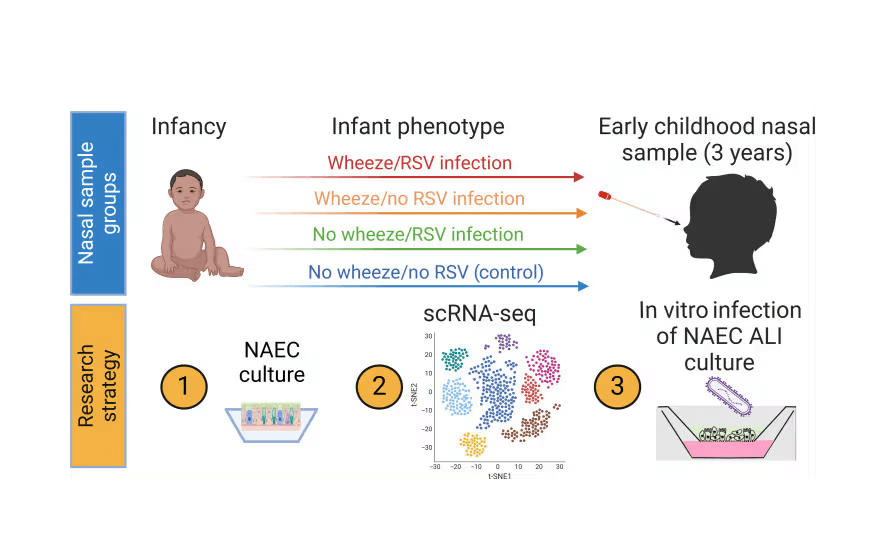
The study, led by researchers at Vanderbilt University Medical Center, analyzed nasal cells from children aged 2 to 3 years. They compared four groups: those with neither wheeze nor RSV, those with only RSV, those with only wheeze, and those with both.
The most severe changes were found in children who experienced both wheezing and RSV infection in their first year. Their airway cells showed signs of delayed maturation and abnormal differentiation. Essentially, the cells appeared to be "stuck" in an immature state, continuing to behave like developing tissue rather than forming a strong, protective barrier.
Respiratory Syncytial Virus (RSV) is a highly contagious virus that targets the respiratory tract. In healthy adults, an RSV infection typically produces mild cold-like symptoms that resolve within a week or two [1,2,3]. However, the virus behaves very differently in infants and young children. For babies, RSV is far more dangerous—it is the leading cause of hospitalization in infants, particularly those under six months of age [1,2,4]. The virus can cause severe lower respiratory tract infections like bronchiolitis and pneumonia [5,6], which can lead to breathing difficulties requiring medical intervention. Nearly all children contract RSV by age two [1,7], making it an almost universal childhood infection, though the severity varies widely among individuals.
The researchers found that in children prone to wheezing, the airway lining undergoes specific changes that make it more susceptible to this virus. The affected cells displayed an increased diversity of receptors—essentially more "doors" that the virus can use to enter the cell.
Normally, airway cells mature from stem cells into specialized cells that protect the lungs. In the affected children, this process goes awry. The study identified that specific growth pathways—cellular instruction manuals that tell cells how to grow and specialize—remained abnormally active.
This constant activation leads to a "leaky" barrier and a blunted antiviral response. When these cells were exposed to RSV in the lab, they fought off the virus poorly compared to cells from healthy children.
This discovery shifts the narrative on asthma origins. It suggests that asthma isn't just about allergies but about fundamental changes in how lung tissue is built during the first years of life.
Experts say identifying these changes early is critical. If doctors can spot this developmental reprogramming, they might be able to intervene with therapies that correct the cell growth before asthma becomes a lifelong condition.
Important Note:
This article discusses ongoing research into RSV and childhood respiratory conditions. The information presented is for educational purposes only and should not be considered medical advice. If you or your child are experiencing symptoms of RSV, wheezing, or any respiratory illness, please consult with a qualified healthcare provider for proper diagnosis and treatment. Early intervention and professional medical guidance are essential for managing respiratory conditions in children. Always seek the advice of your pediatrician or other qualified health professional with any questions you may have regarding your child's health.
CDC. Respiratory Syncytial Virus Infection (RSV): Symptoms and Care. https://www.cdc.gov/rsv/symptoms/index.html
Mayo Clinic. Respiratory syncytial virus (RSV). https://www.mayoclinic.org/diseases-conditions/respiratory-syncytial-virus/symptoms-causes/syc-20353098
Cleveland Clinic. RSV (Respiratory Syncytial Virus). https://my.clevelandclinic.org/health/diseases/8282-respiratory-syncytial-virus-rsv
Children's Hospital of Philadelphia. RSV (Respiratory Syncytial Virus) in Babies. https://www.chop.edu/conditions-diseases/rsv-respiratory-syncytial-virus-babies
Johns Hopkins Medicine. Respiratory Syncytial Virus (RSV) in Children. https://www.hopkinsmedicine.org/health/conditions-and-diseases/respiratory-syncytial-virus-rsv-in-children
NIH/National Heart, Lung, and Blood Institute. Bronchiolitis. https://www.nhlbi.nih.gov/health/bronchiolitis
American Lung Association. Learn About RSV. https://www.lung.org/lung-health-diseases/lung-disease-lookup/rsv
The 'double hit' effect refers to the combination of early wheezing and Respiratory Syncytial Virus (RSV) infection in the first year of life, which together can reprogram airway cells. This dual exposure leads to delayed maturation and abnormal differentiation of airway cells, leaving them in an immature, 'stuck' state that may increase the risk of chronic respiratory conditions like asthma.
In healthy adults, RSV typically causes mild, cold-like symptoms that resolve within a week or two. However, in infants and young children—especially those under six months—RSV is the leading cause of hospitalization and can lead to severe lower respiratory tract infections such as bronchiolitis and pneumonia, often requiring medical intervention due to breathing difficulties.
The research suggests that identifying abnormal airway cell development early—particularly in children with a history of wheezing and RSV—could allow for timely interventions. By detecting this 'reprogramming' of airway cells before asthma fully develops, doctors may be able to use therapies to correct cell growth and potentially prevent asthma from becoming a lifelong condition.
This article has been reviewed by a PhD-qualified expert to ensure scientific accuracy. While AI assists in making complex research accessible, all content is verified for factual correctness before publication.
The Viral Wake-Up Call: How Respiratory Infections Reactivate Dormant Cancer
Recent research reveals that common respiratory viruses like influenza and SARS-CoV-2 can "wake up" dormant cancer cells in the lungs through inflammatory signals, particularly IL-6, transforming them into active metastatic lesions within weeks.
The AI Revolution in Drug Discovery: Screening the Human Proteome in a Day
Traditional drug screening is too slow to address the 90% of disease targets lacking treatments, taking years to test the human genome. DrugCLIP's AI framework screens drugs 10 million times faster, processing 10 trillion protein-drug combinations in 24 hours and democratizing access through GenomeScreenDB.
AI Diagnostics Revolution: Cancer, Alzheimer's, and Diabetes
Exploring AI-driven breakthroughs in cancer, Alzheimer's, and diabetes diagnostics, their impact, and future challenges.
clumsy_scientist
Jan 12, 2026
ı love that there are more research papers to learn more. Because this issue seems very criticalö, parents must learn more and be more careful. This paper is so usefull
Get notified when we publish new articles. No spam, unsubscribe anytime.