Psychology
Podcast Host
Expert Verified
Why Are Teens Everywhere Feeling More Alone?
4 min read
Teens around the world are feeling lonelier than ever — and phones might be part of the story.
Hey everyone!
So I was scrolling through this massive global study — okay, fine, I do read psychology papers for fun — and what I found kind of knocked me back. Adolescent loneliness isn’t just spiking in the U.S. or the UK. It’s happening almost everywhere. And the timeline? It lines up scarily well with when smartphones took over our lives.
The data comes from PISA — that’s the Programme for International Student Assessment — which surveyed over a million 15- and 16-year-olds across 37 countries. They asked simple questions like how often teens feel alone at school. The results? Between 2012 and 2018, school loneliness increased in 36 out of 37 countries.
Let that sink in. In less than a decade, nearly twice as many teens reported high levels of loneliness. And get this — the jump was especially sharp among girls. That’s not just a blip. That’s a global emotional shift.
Here’s the thing: you might think money problems or tough economies would make teens feel lonelier, right? But the data says no. Higher unemployment actually correlated with lower loneliness. Yeah, I did a double-take too.
Income inequality? No link.
GDP? Nothing.
Family size? Nada.
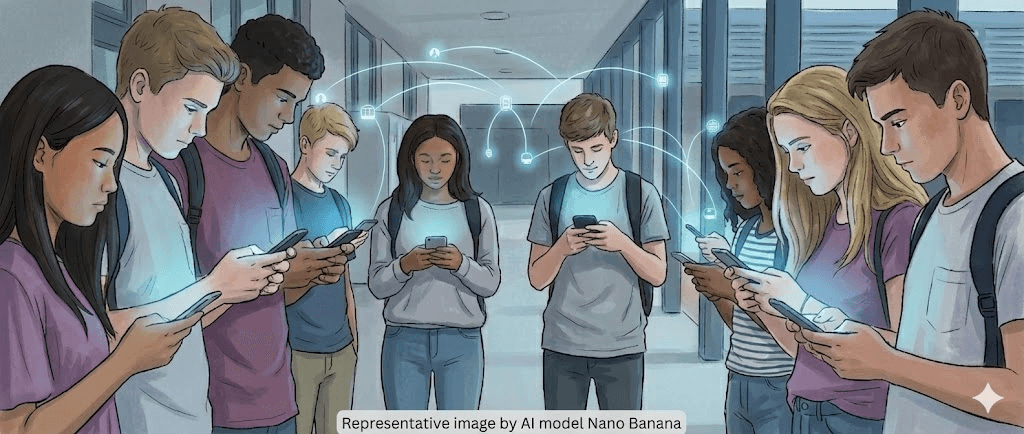
But smartphone access and internet use? Boom — strong correlation. The more students had phones and spent time online during the week, the lonelier they felt at school. Not because of the phone in their hand, maybe — but because of what it changed in their social world.
Let me tell you something: this isn’t about blaming teens for using their phones too much. It’s about how entire peer cultures shifted. When most kids go online all the time, something changes. In-person hangouts drop off. Conversations get interrupted. And social media? It can feel like walking into a party where everyone else already has their group.
Especially for girls, studies suggest, the pressure to be seen, liked, and included — while also seeing everyone else’s highlight reels — can deepen loneliness. Fear of missing out. Cyberbullying. Social comparison. These aren’t just buzzwords — they’re emotional taxes.
And here’s a wild detail: the biggest jumps in loneliness happened in countries where smartphone access went from moderate to nearly universal — around 75%. It’s like a tipping point. Once most kids are plugged in, being offline (or even just less active online) starts to mean being left out.
South Korea, for example, didn’t see a spike — probably because phones were already everywhere by 2012. The shift had already happened.
We can’t prove phones caused this — correlation isn’t causation, right? But the pattern is too consistent to ignore. And here’s the kicker: this isn’t just an individual problem. It’s a group dynamic.
That means telling one kid to “put the phone down” might help them — but it won’t fix the culture. That’s why solutions need to be collective. Like France banning phones in schools. Or schools creating tech-free zones. Or families doing phone-free dinners — yeah, I know, that’s a battle.
Let’s be real: digital media helps us stay connected, too — especially during hard times like the pandemic. But balance matters. And right now, we’re out of balance.
The loneliness measure wasn’t about depression — but it was tied to well-being. Teens who felt lonelier also reported more sadness, less joy, and lower life satisfaction. So this? This might be part of the bigger story of rising teen anxiety and depression worldwide.
So here’s my question for you: What did your high school social scene feel like before smartphones? And what could we do — as schools, families, communities — to help rebuild real connection?
Let’s talk about it.
This article has been reviewed by a PhD-qualified expert to ensure scientific accuracy. While AI assists in making complex research accessible, all content is verified for factual correctness before publication.
No comments yet. Be the first to share your thoughts!
Get notified when we publish new articles. No spam, unsubscribe anytime.