Psychology
Podcast Host
Expert Verified
Brain Hack: Future Thinking Rewires Your Motivation
3 min read
New fMRI research reveals that thinking about your values in the future—not the past—activates your brain's reward system the same way as winning money or eating chocolate, helping you overcome resistance and actually change your behavior.
We all know that feeling when you’re trying to change a habit—like going to the gym—and you just hit a wall. It’s like your brain is actively fighting you.
Well, here’s the thing. This study looked at self-affirmation theory. Basically, it's the idea that we are obsessed with maintaining a positive self-view. So when change feels like criticism, our brain goes into defense mode and sabotages us.
But let me tell you something, the researchers found a way around this. They put people in an fMRI machine—yeah, those giant tubes—and had them reflect on their core values. Some people thought about these values in the past, and others looked toward the future.
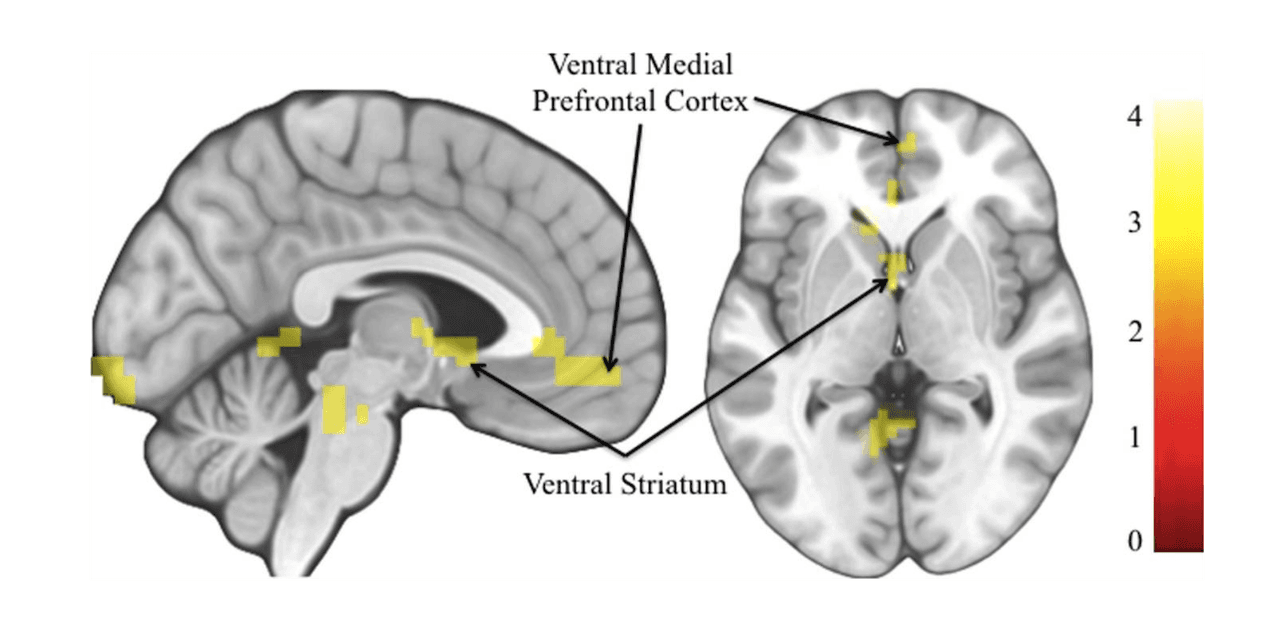
When participants focused on future-oriented values, their brain's reward system lit up like a Christmas tree.
We’re talking about the ventral striatum and the ventral medial prefrontal cortex. That’s the part of your brain that usually reacts to, like, winning money or eating chocolate.
This is where it gets cool. It turns out, thinking about your values in the future is the secret sauce. It engages the self-processing parts of your brain—the medial prefrontal cortex—and links them to that reward feeling we just talked about.
See, the study found that just thinking about a value isn't enough. It’s how you think about it. When you project that value into the future—imagining yourself living it out—you're essentially tricking your brain. It combines the "I am a good person" feeling with the "I am getting a treat" feeling.
The researchers call this prospection, and it seems to supercharge the affirmation. Instead of just remembering you're a decent guy or gal, you're simulating a reward that hasn't happened yet. It’s kind of like daydreaming about being awesome, but your brain treats it as a real, tangible reward. It makes you feel good about yourself now, which helps you push past that defensive wall.
So, did this brain activity actually mean anything? Yes! The people who showed this specific neural activity actually moved more in the following month.
And we aren't guessing here. They strapped accelerometers to these folks—it wasn't just "self-reports" where people lie about how many salads they ate. The scans predicted behavior change better than just asking people, "Hey, do you feel motivated?" The ones who had that strong future-value brain response actually sat less and moved more in the real world, weeks later.
It’s fascinating because it shows that "positive thinking" isn't just woo-woo stuff. It has a specific biological signature. If you can hack that system by looking at your future self, you can literally change your behavior.
Next time you're trying to make a change, don't just think about who you are today. Think about who you want to be.
Anyway, I want to hear from you. What’s a core value you’re holding onto for the future? Hit reply and let me know—let’s get those reward centers firing!
This article has been reviewed by a PhD-qualified expert to ensure scientific accuracy. While AI assists in making complex research accessible, all content is verified for factual correctness before publication.
No comments yet. Be the first to share your thoughts!
Get notified when we publish new articles. No spam, unsubscribe anytime.