Biology
Academic Lite
Expert Verified
This study reveals that sleep restriction reduced calorie diet fat loss efficacy by 55%, causing dieters to burn muscle instead of fat.
Sleep restriction reduced calorie diet fat loss efficacy is significantly compromised by lack of rest. In this study, participants sleeping 5.5 hours lost 55% less fat (0.6 kg) than those sleeping 8.5 hours (1.4 kg). This matters because insufficient sleep causes the body to burn muscle instead of fat during caloric restriction.
You might think cutting sleep helps you burn more calories, but when it comes to sleep restriction reduced calorie diet fat loss efficacy, the evidence suggests otherwise. Let me break down why getting enough shut-eye is actually critical if you want your diet to target fat specifically.
Here is the fascinating part about this randomized crossover study. Researchers took 10 overweight adults and put them on a reduced-calorie diet for two separate 14-day periods. During one period, they slept 8.5 hours a night, and during the other, they slept only 5.5 hours. The results were striking.
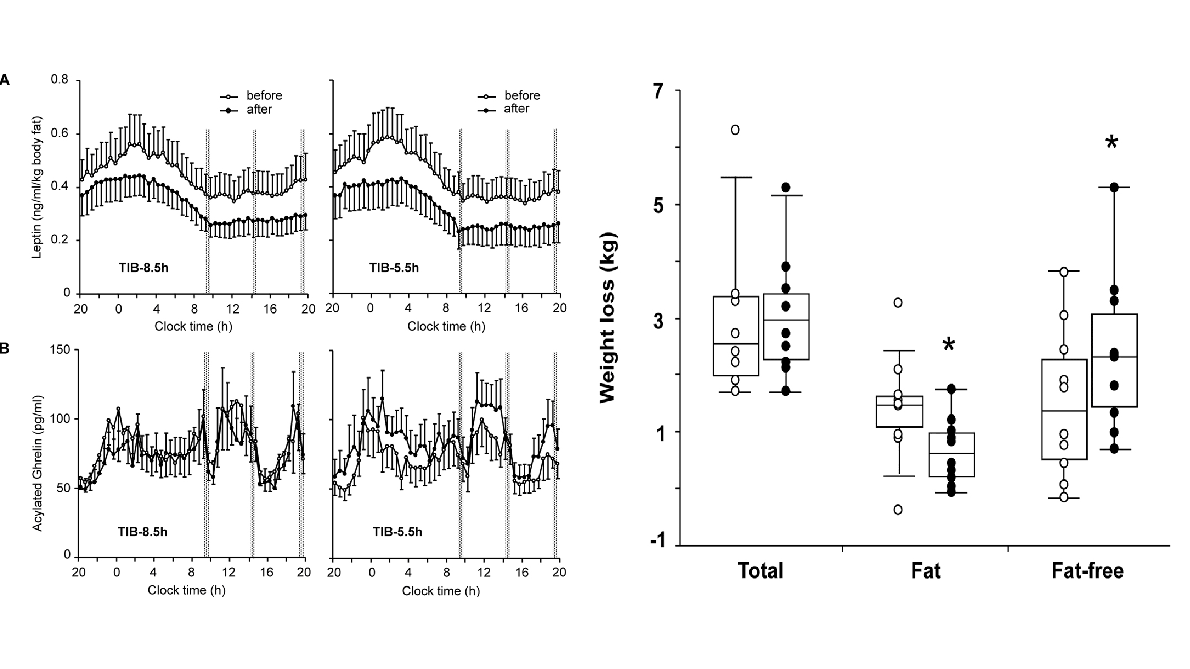
Even though both groups lost about the same total amount of weight, roughly 3 kilograms, the composition of that weight loss was completely different. When participants got adequate sleep, more than half of their weight loss came from fat. However, when their sleep was restricted, the proportion of weight lost as fat dropped by a massive 55%. Specifically, the adequate sleep group lost 1.4 kg of fat, while the sleep-restricted group lost only 0.6 kg. This builds on earlier research regarding metabolic adaptation and highlights how sleep curtailment fundamentally alters how we process energy.
So, what is happening inside the body to cause this shift? The study found that sleep restriction triggered a catabolic state, meaning the body started breaking down tissue. Instead of burning fat stores, the body increased the loss of fat-free body mass by 60%. In the sleep-restricted condition, participants lost 2.4 kg of fat-free mass compared to just 1.5 kg in the adequate sleep condition.
Let me explain the mechanism behind this. The researchers observed a shift in substrate utilization, indicated by a higher respiratory quotient. This means the body was oxidizing less fat and relying more on other fuels. Additionally, the sleep-restricted group had higher concentrations of the hormone ghrelin. Ghrelin stimulates hunger and promotes the retention of fat. The evidence suggests that the sleep-deprived body enters a "thrifty" mode, breaking down muscle or lean tissue to preserve energy-dense fat stores, likely to support the metabolic needs of the brain during extended wakefulness.
This research has huge implications for real-world dieting. If you are cutting calories but not sleeping enough, you might be undermining your own efforts. The study noted increased hunger and a lower resting metabolic rate in the sleep-restricted group. This creates a double whammy where you feel hungrier, burn fewer calories at rest, and lose muscle instead of fat. This metabolic compensation could explain why so many people struggle to maintain weight loss long-term.
However, we have to look at the limitations. The study was small, involving only 10 participants, and it took place in a controlled laboratory setting rather than the real world. The duration was also short at just 14 days. While the physiological mechanisms are clear, we need more research to see how these effects play out over months or years of dieting. Nevertheless, the data strongly suggests that if you want to maximize fat loss and preserve muscle, getting enough sleep is just as important as what you eat.
Sleep restriction reduces the proportion of weight lost as fat by 55%. In the study, participants with 8.5 hours of sleep lost 1.4 kg of fat, while those with 5.5 hours lost only 0.6 kg over 14 days.
Sleep loss increases hunger and ghrelin levels while lowering resting metabolic rate. This shifts substrate utilization away from fat oxidation, causing the body to break down fat-free mass, or muscle, for energy instead.
The study was limited by a small sample size of only 10 participants and a short duration of 14 days. The controlled laboratory setting may also differ from real-world conditions where diet adherence varies.
This article has been reviewed by a PhD-qualified expert to ensure scientific accuracy. While AI assists in making complex research accessible, all content is verified for factual correctness before publication.
Chrs
Apr 24, 2026
And i wonder this is true whether you gain fat even though you are not trying lose weight or doing calorie restriction?
OverweightPerson
Apr 24, 2026
Very interesting, i have never knew that you need to sleep more to lose fat, some parts like hormone, did not understand but i will try to sleep more when i decided lose weight 🤣
Get notified when we publish new articles. No spam, unsubscribe anytime.