Technology
Explain Like I'm 5
Expert Verified
Quantum Computers: Super-Powered Machines of the Future!
3 min read
Quantum computers use amazing science to solve super-hard problems. They’re still growing, but could change medicine, energy, and security!
Guess what? There’s a new kind of computer coming — and it’s wildly different from your tablet or laptop!
These are called quantum computers, and they don’t just use 0s and 1s like normal machines. They use special rules from the tiny world of atoms and particles!
Imagine a coin spinning in the air. Is it heads or tails? While it spins, it’s kind of both at once! That sounds silly, right? But in the tiny world of atoms and particles, things can be in two places—or two states—at once! This is called superposition — a key trick quantum computers use.
And guess what else? Two tiny particles can become best buddies, no matter how far apart they are. Change one, and poof—the other changes too! This magic trick is called entanglement. It’s like having twin LEGO blocks that always match colors, even if one is in your room and one is on the moon!
Regular computers use bits—like tiny switches that are either ON (1) or OFF (0). But quantum computers use qubits, which can be 0, 1, OR both at once—thanks to superposition!
These powers let quantum computers tackle problems regular computers struggle with — like solving giant puzzles in seconds!
So many places!
In medicine, they could help design life-saving drugs by simulating how molecules work — something super tough today.
For climate change, they might find new ways to make clean energy or better batteries.
In banking, they could quickly test risks in shaky markets and help improve investment plans.
They could even boost robotics and self-driving cars by making decisions faster using huge amounts of data.
And in telecommunications, they may create unbreakable codes to keep your messages safe — a field called quantum cryptography.
Even though the idea is exciting, building these machines is really hard.
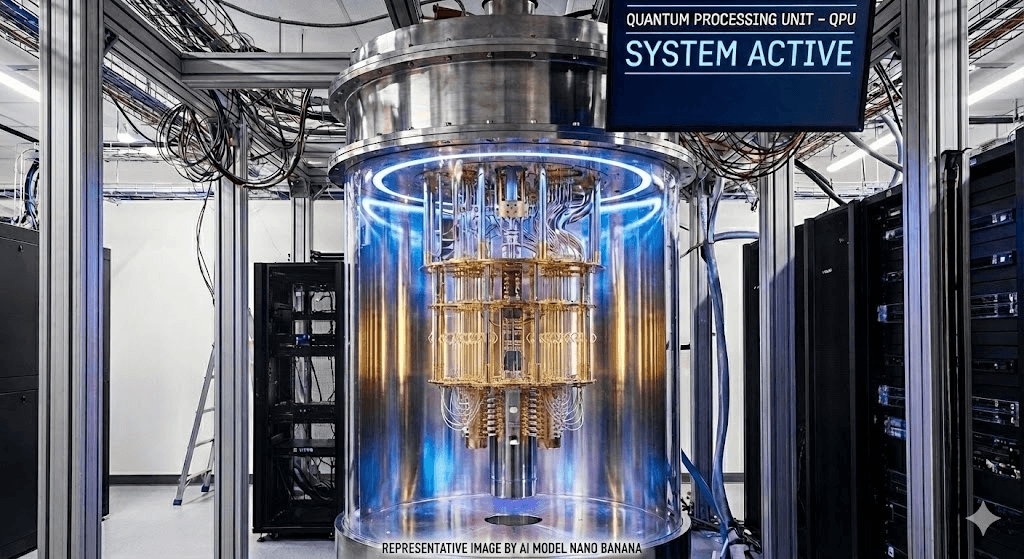
Qubits are super sensitive. They need to be kept colder than outer space — and even a tiny wobble can mess them up! This is called decoherence.
Also, we can’t just copy qubits like regular data. And fixing mistakes in quantum math is much trickier than in normal computers.
Right now, most quantum computers are small and make lots of errors. Scientists are working on error-correcting codes and better software to help them run smoothly.
Big companies like IBM, Google, and Microsoft are building fun tools (like Qiskit and Cirq) so people can learn and experiment with quantum coding — even from home!
Some researchers are testing quantum cloud computing, where you send a problem to a real quantum machine over the internet!
And while we don’t have giant, flawless quantum computers yet, the future looks bright. One day, they might work with regular computers to solve the world’s toughest challenges.
Isn’t that cool?
We’re just getting started — and the next big discovery could be around the corner!
This article has been reviewed by a PhD-qualified expert to ensure scientific accuracy. While AI assists in making complex research accessible, all content is verified for factual correctness before publication.
No comments yet. Be the first to share your thoughts!
Get notified when we publish new articles. No spam, unsubscribe anytime.